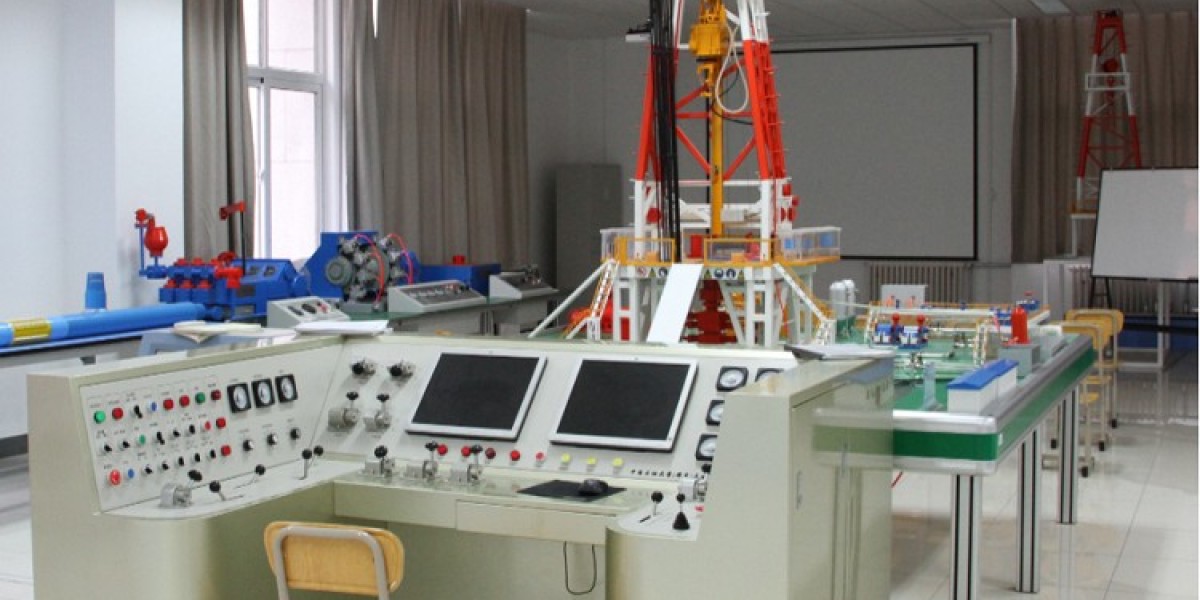

When it comes to the task of planning and carrying out a rock drilling program, one must approach the endeavor with a great deal of complexity and difficulty in mind in order to be successful. There are specific steps that need to be taken in order to guarantee a positive outcome when drilling for any reason, whether Well Logging Simulator be for the purpose of exploration, production, geotechnical analysis, or environmental remediation. We are going to walk you through the primary stages of a rock drilling program in the following paragraphs, beginning with the preliminary planning and site selection and ending with the conclusive evaluation and report writing.

Both the strategies and the goals will be discussed.
When starting a program to drill holes in rocks, the first thing that needs to be done is to create an outline of the project's goals and the parameters that Well Logging Simulator will operate within
This will help ensure that the program is successful
Why are you boring out such a large number of holes
What are you hoping to accomplish by acting in this manner
What specific kinds of insights do you anticipate gaining from the rock samples that you have gathered
How far into the material do you need to drill, and how many holes do you need to make in sum total
With the help of these questions, you will be able to figure out the procedure for drilling, the procedure for sampling, the budget for the program, and the timeline for its completion
Reviewing the geological and geophysical data that is at your disposal is another step that needs to be taken before determining the target zones and the potential dangers that lie within them
Maps, logs, and surveys, to name a few examples, are all good places to look for data like this
The procedure of selecting a location for the construction site and getting it ready for use.
The following thing that needs to be done is to choose a location for the drilling operations, and then get that location ready for the Well Logging Simulator once you have made that decision
You need to pay a visit to the location and carry out a geotechnical investigation at the same time in order to evaluate the ground conditions, the accessibility, the environmental impact, and the safety risks associated with the site
In addition, you need to do this in order to ensure that you don't put anyone in danger
In addition to this, it is essential that you obtain the necessary permits and approvals from the relevant authorities and stakeholders, such as landowners, regulators, and communities
Doing so will ensure that your project is carried out without incident
If you follow these steps, your project will be carried out legally and successfully
In addition, you will need to prepare the site by removing any vegetation or other obstacles that may be in the way, leveling the ground, installing the utilities, and building the drill pad in addition to the sump
Drilling and sampling
The third step entails making holes in the rock in order to collect samples of it. This step must be carried out in accordance with the overall design of the program as well as the goals that it aims to accomplish. You have to make sure that the rock formation you are working in is compatible with the drill bit, the drill string, and the drilling fluid that you use. In order to get the best possible results and stay clear of any complications, it is essential to keep a close eye on the drilling parameters, such as the penetration rate, torque, pressure, and temperature. This is the only way to ensure success. You should also collect the rock samples at regular intervals or at specific depths, using the appropriate sampling method, such as core, cuttings, or grab. In addition, you should collect the rock samples using the appropriate sampling method. In addition to this, you need to make sure that you collect the rock samples using the correct sampling method. In addition to this, you need to get a head start on collecting the rock samples by getting started as soon as you possibly can. If you do not want to run the risk of the samples becoming contaminated or damaged in any other way, you will need to correctly label, store, and transport them.
Comprehensive investigation as well as testing
- The testing and analysis of the rock samples is the fourth step, and it is done so that you can obtain the data and information you need for the project
- This is done so that you can obtain the data and information you need
- This is done in order to ensure that you have access to the data and information that you require
- You will need to analyze the samples using the appropriate tests and measurements, such as those for density, porosity, permeability, strength, mineralogy, and chemistry
- When you are carrying out the testing and analysis, you need to give special attention to ensuring that you make use of the appropriate tools and procedures
- This category contains a variety of instruments and methods, some of which are used in laboratories, some of which are utilized in the field, and some of which are software tools
- In addition to that, you need to make certain that the results and findings of the tests and analyses are documented and recorded in a manner that is methodical and suitable
Both the analysis and the interpretation are included in the price.
The information and data that was gleaned from examining and testing the rock samples must be analyzed and made sense of before moving on to the fifth step of the process. The information will be analyzed and interpreted in order to accomplish this goal. You should make use of the pertinent theories and models in order to gain an understanding of the characteristics and behavior of the rock as well as the formation. This will allow you to better predict the rock's future behavior. In addition to this, you need to investigate the correlations and dissimilarities between the data and information obtained from a variety of sources, such as drilling logs, geophysical surveys, and geological maps, amongst other things. This is a necessary step in order to successfully complete the task at hand. In addition to this, you are tasked with identifying any peculiarities, trends, or patterns that may be present in the data and information and providing an explanation for why they are present. In addition, based on the evaluation and interpretation, you need to arrive at some conclusions and make some recommendations.
This service provides both reporting and communication as part of its package.
The very last step in the rock drilling program entails presenting a report on the findings and outcomes of the program to the various stakeholders and clients, as well as communicating these findings and outcomes to them. The program for drilling holes in rocks comes to a conclusion with this step. You will be responsible for putting together a report that is not only detailed but also simple to comprehend. This report ought to include a synopsis of the program's goals, procedures, results, and overall conclusions. You have a responsibility to ensure that the report contains all of the pertinent particulars, which may include data, information, graphs, tables, maps, and pictures. You should also present the report to the stakeholders and clients and discussWell Logging Simulatorwith them, making sure to use the appropriate format and language at all times. presenting the report to the stakeholders and clients and discussing it with them. presenting the report to the various parties involved, including the clients and stakeholders. You should also respond to any questions, comments, or suggestions that they may have given you. They may have given you any of these things. It is possible that any of these things were given to you by them.